Selling gold in Sri Lanka? Avoid 7 common mistakes and learn how to check gold rates, purity, deductions and get a fair valuation.
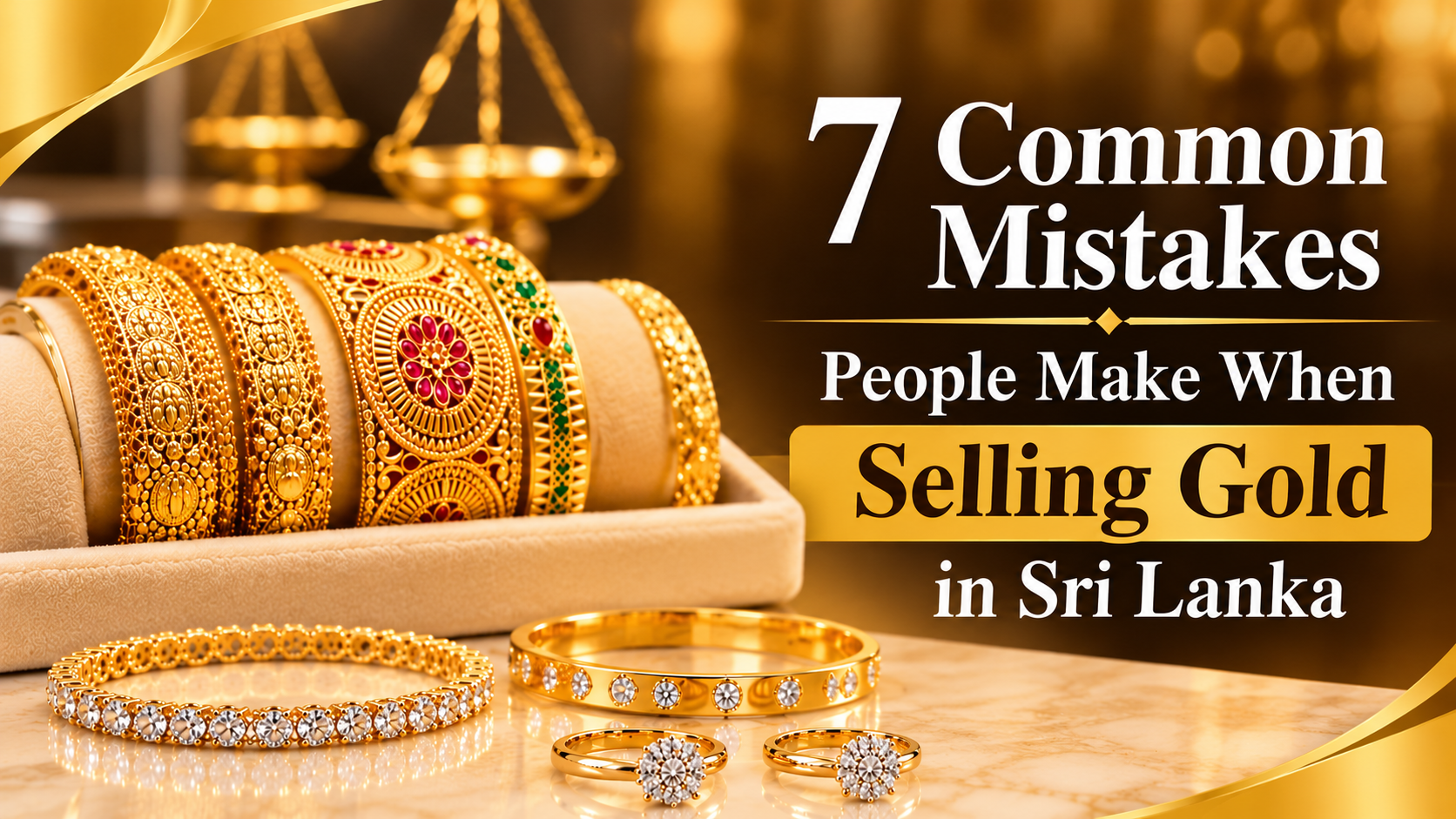
7 Common Mistakes People Make When Selling Gold in Sri Lanka
Selling gold can be an important financial decision. Whether you are selling an old necklace, a broken bracelet, unwanted jewellery, inherited gold items or pieces you no longer use, getting a fair price should always be your priority. Gold is a valuable asset, and even a small misunderstanding about its weight, purity or current market value can affect the amount you receive.
In Sri Lanka, gold prices change regularly depending on international gold market movements, currency exchange rates, local demand and other economic factors. As a result, the amount you could receive for your jewellery today may be different from what you would have received a few days ago.
Although selling gold may seem straightforward, many people make avoidable mistakes because they are unfamiliar with the valuation process. Some accept the first offer without comparing prices, while others do not understand the difference between gold purity levels or the deductions that may apply.
The good news is that you do not need to be a gold expert to make a confident decision. Understanding a few important points before visiting a gold buyer can help you protect your item’s value, avoid unnecessary deductions and enjoy a more transparent selling experience.
Here are seven common mistakes people make when selling gold in Sri Lanka and practical ways to avoid them.
1. Not Checking the Current Gold Rate Before Selling
One of the most common mistakes people make when selling gold is not checking the current gold rate before visiting a buyer.
Gold prices do not remain the same every day. They are influenced by international market prices, currency movements, economic conditions and local market factors. Because of these changes, the value of gold can increase or decrease over time.
For example, if you decide to sell a 22K gold necklace without knowing the current market rate, you may find it difficult to determine whether the amount offered is reasonable. You might accept a lower offer simply because you have no reference point for comparison.
Understanding the daily gold rate gives you a starting point when evaluating an offer.
How to avoid this mistake:
Before selling your gold, take a few minutes to check the latest gold rates in Sri Lanka. Pay particular attention to the rates for 24K and 22K gold, as these are commonly used when discussing gold prices.
You should also understand that the market rate and the amount offered for your jewellery may not be exactly the same. Buyers generally calculate the gold value based on the item’s actual weight and purity, while applicable deductions or business costs may affect the final payment.
Ask the buyer which gold rate is being used for your valuation and how the final amount is calculated.
It is also useful to understand why gold prices change. Following daily market movements can help you make a more informed decision about when to sell.
2. Not Knowing the Weight and Purity of Your Gold
Another common mistake is selling gold without knowing its approximate weight or purity.
Not all gold jewellery has the same gold content. Some pieces contain a higher percentage of pure gold, while others are mixed with metals such as copper, silver or zinc to improve their strength and durability.
Gold purity is commonly measured in karats (K). Understanding the karat value of your jewellery is important because it directly affects its gold content and valuation.
Here are some common gold purity levels:
- 24K Gold: Approximately 99.9% pure gold.
- 22K Gold: Approximately 91.6% pure gold.
- 21K Gold: Approximately 87.5% pure gold.
- 18K Gold: Approximately 75% pure gold.
- 14K Gold: Approximately 58.5% pure gold.
You may notice small numbers or stamps on your jewellery. These are known as gold hallmarks and often indicate the item’s purity.
However, a hallmark should not be treated as the only proof of purity. Older jewellery, imported pieces and repaired items may have different markings, and some items may not have visible stamps at all.
How to avoid this mistake:
Before selling your jewellery, check whether it has any visible purity markings. You can also separate your jewellery according to its known karat value if you have certificates or previous purchase documents.
If you have a weighing scale at home, you may check the approximate weight of your items. However, a professional jewellery scale should be used for the actual valuation.
Most importantly, ask for the purity of each item to be tested and explained before agreeing to sell.
Knowing the difference between 22K, 18K and other purity levels helps you understand why different jewellery pieces may receive different valuations.
3. Accepting the First Offer Without Comparing Other Buyers
When people decide to sell their gold, they sometimes visit the nearest buyer and immediately accept the first offer they receive.
Although this may seem convenient, it is not always the best approach.
Different gold buyers may have different valuation procedures, pricing policies and deductions. Even when two buyers use the same market gold rate, the final amount offered may differ.
For example, one buyer may provide a clear breakdown of the gold weight, purity and applicable deductions, while another may simply tell you the total amount without explaining how it was calculated.
Without comparing offers, you may miss an opportunity to receive a better and more transparent valuation.
How to avoid this mistake:
Consider visiting at least two reputable gold buyers before making your final decision.
When comparing offers, do not focus only on the total amount. Ask each buyer to explain:
- The gold rate used for the calculation.
- The weight of the gold being valued.
- The purity identified through testing.
- Any applicable deductions or charges.
- The final amount payable.
Make sure you are comparing the same information across all buyers. An offer that initially looks higher may include additional deductions that reduce the final payment.
You should also consider the buyer’s transparency, professional conduct and willingness to explain the valuation process.
Remember, you are not required to accept an offer immediately. Take your time, compare your options and choose the one that gives you confidence.
4. Ignoring Deductions, Charges and the Final Payment Calculation
One of the most important things to understand when selling gold is how the final payment is calculated.
Some people focus only on the advertised gold rate without asking whether any deductions or additional charges apply.
This can lead to confusion when the final payment is lower than expected.
For instance, jewellery may contain gemstones, non-gold components, soldering materials or other elements that are not included in the payable gold weight. Depending on the item and the buyer’s valuation policy, certain deductions may apply.
It is important to understand that the total weight of a jewellery item is not necessarily equal to its actual gold weight.
Consider a necklace that weighs 10 grams in total. If it contains stones or other non-gold materials, the gold content used for valuation may be lower than the total weight.
Similarly, the purity of the gold affects the amount of pure gold contained in the item.
How to avoid this mistake:
Always ask for a detailed explanation of the valuation before agreeing to sell.
Find out whether the buyer applies any charges for testing, handling or other services. If deductions are made for gemstones or non-gold components, ask how they are calculated.
You should be able to understand the following information:
- Total item weight.
- Weight of any non-gold components, where applicable.
- Gold purity.
- Gold rate used.
- Applicable deductions.
- Final payable amount.
Do not hesitate to ask questions if any part of the calculation is unclear.
A transparent buyer should be willing to explain the valuation and provide a clear breakdown of the amount you will receive.
5. Allowing Your Gold to Be Weighed or Tested Without Watching
Your jewellery should always remain within your sight during the weighing and testing process.
Some people hand over their gold and wait until the valuation is completed without paying attention to how the items are handled. This can create unnecessary uncertainty, particularly if they are unfamiliar with the process.
Weighing and testing are two important stages of gold valuation.
Weighing determines the item’s weight, while testing helps establish its gold purity. Both are necessary to calculate a reasonable value.
For example, a jewellery item may be stamped 916, but the buyer may still need to test it to verify its actual purity. The testing process helps identify whether the item contains the expected amount of gold.
Different testing methods may be used depending on the item and the buyer’s equipment.
How to avoid this mistake:
Always ask to observe the weighing and testing process.
Pay attention to the following:
- Make sure your jewellery is weighed using an appropriate jewellery scale.
- Check that the scale reading is visible to you.
- Observe whether each item is weighed separately or as a clearly identified group.
- Ask how the purity is tested.
- Request an explanation of the test results.
- Confirm that the weight and purity details are recorded correctly.
If you are selling several pieces, it is particularly important to understand how each item is evaluated.
You should never feel uncomfortable about asking to see your jewellery being weighed and tested. A professional valuation should allow you to understand what is happening at every stage.
6. Selling Gold in a Hurry or Under Pressure
Another mistake people make is rushing into a gold-selling decision.
Financial emergencies, unexpected expenses, medical bills or personal circumstances may create pressure to sell valuable jewellery quickly.
In other situations, people may feel encouraged to accept an offer because they are told that a special price is available only for a limited period.
Although there may be genuine reasons to sell gold quickly, making a decision without understanding its value can result in disappointment.
Gold is a valuable asset, and selling it should be a considered decision whenever possible.
For example, someone who needs immediate cash may accept the first available offer without checking the daily gold rate or comparing the valuation with another buyer.
Once the transaction is completed, reversing the sale may not be possible.
How to avoid this mistake:
Give yourself enough time to understand the value of your jewellery before making a final decision.
Even if you need money urgently, try to follow a few basic steps:
- Check the latest gold rate.
- Understand the weight and purity of your items.
- Obtain a clear valuation.
- Ask about any deductions.
- Compare offers if time allows.
- Confirm the final payment before agreeing to sell.
Do not allow promotional offers or pressure from others to influence your decision.
A trustworthy buyer should give you enough time to review the valuation and make your own choice.
Remember, receiving a valuation does not mean you are obligated to sell your gold. You can always decide to take your jewellery back and consider your options.
7. Forgetting to Obtain a Receipt and Check the Transaction Details
The final mistake is completing a gold sale without obtaining a proper receipt or checking the transaction details.
Some sellers focus entirely on receiving their payment and forget to request documentation.
However, a receipt is an important record of the transaction. It provides written evidence of the items sold and the amount received.
Without proper documentation, it may become difficult to refer to the transaction details later if you have questions or need clarification.
How to avoid this mistake:
Before completing the sale, make sure you receive a receipt or transaction record containing the relevant details.
Where applicable, check that it includes:
- Date of the transaction.
- Description of the jewellery items.
- Weight of each item or clearly identified item groups.
- Gold purity.
- Rate used for valuation.
- Applicable deductions.
- Total amount paid.
- Payment details.
You should also check that the amount received matches the agreed final valuation.
Reputable gold buyers may request identification documents as part of their transaction procedures and applicable legal requirements. Be prepared to provide the necessary identification when requested.
Keep your receipt in a safe place, especially if you have sold several items in one transaction.
Maintaining proper documentation gives you a useful reference and helps ensure that the transaction is recorded clearly.
A Simple Checklist Before Selling Your Gold
Preparing before visiting a gold buyer can make the entire process easier. You do not need to complete complicated calculations or become an expert in gold valuation. A little preparation is usually enough to help you avoid common mistakes.
Use this checklist before selling your jewellery.
1. Check the Current Gold Rate
Find out the latest 22K and 24K gold rates in Sri Lanka. This gives you a general understanding of current market conditions.
2. Identify Your Jewellery
Separate your jewellery according to its known purity levels, if possible. Look for markings such as 916, 750 or 585.
3. Check the Approximate Weight
If you have a suitable weighing scale, check the approximate weight of your items. Remember that the final weight should be confirmed using a professional jewellery scale.
4. Take Photographs of Your Items
Take clear photographs of your jewellery before visiting the buyer. This can help you keep a personal record of the items you intend to sell.
5. Bring Relevant Documents
If available, take purchase receipts, certificates or other documents related to your jewellery. These may provide useful information about the items.
6. Compare More Than One Offer
Consider getting valuations from different reputable buyers. Compare the calculation and final payment rather than looking at the advertised rate alone.
7. Ask About All Deductions
Make sure you understand whether any charges or deductions apply and how they affect your final payment.
8. Observe the Valuation Process
Stay with your jewellery while it is being weighed and tested. Ask questions whenever something is unclear.
9. Confirm the Final Amount
Before agreeing to sell, check that you understand the final amount you will receive.
10. Obtain a Receipt
Always request a transaction record and check that the details are correct.
Following these simple steps can help you approach the gold-selling process with greater confidence.
Sell Your Gold with Confidence
Selling gold should not be a confusing or stressful experience. Most common mistakes when selling gold happen because people rush into a decision, overlook important details or do not understand how their jewellery is valued.
By checking the daily gold rate, understanding gold purity, comparing offers, asking about deductions and observing the weighing and testing process, you can make a more informed decision.
Remember that transparency is just as important as the final amount offered. A good gold-selling experience should allow you to understand how your jewellery is evaluated and why a particular amount is offered.
Whether you are planning to sell old jewellery, broken gold items, unwanted ornaments or inherited pieces, take the time to understand their value before making your decision.