Wondering when to sell your gold? Discover what affects gold prices in Sri Lanka, how market trends influence selling decisions and how to get a fair value for your gold.
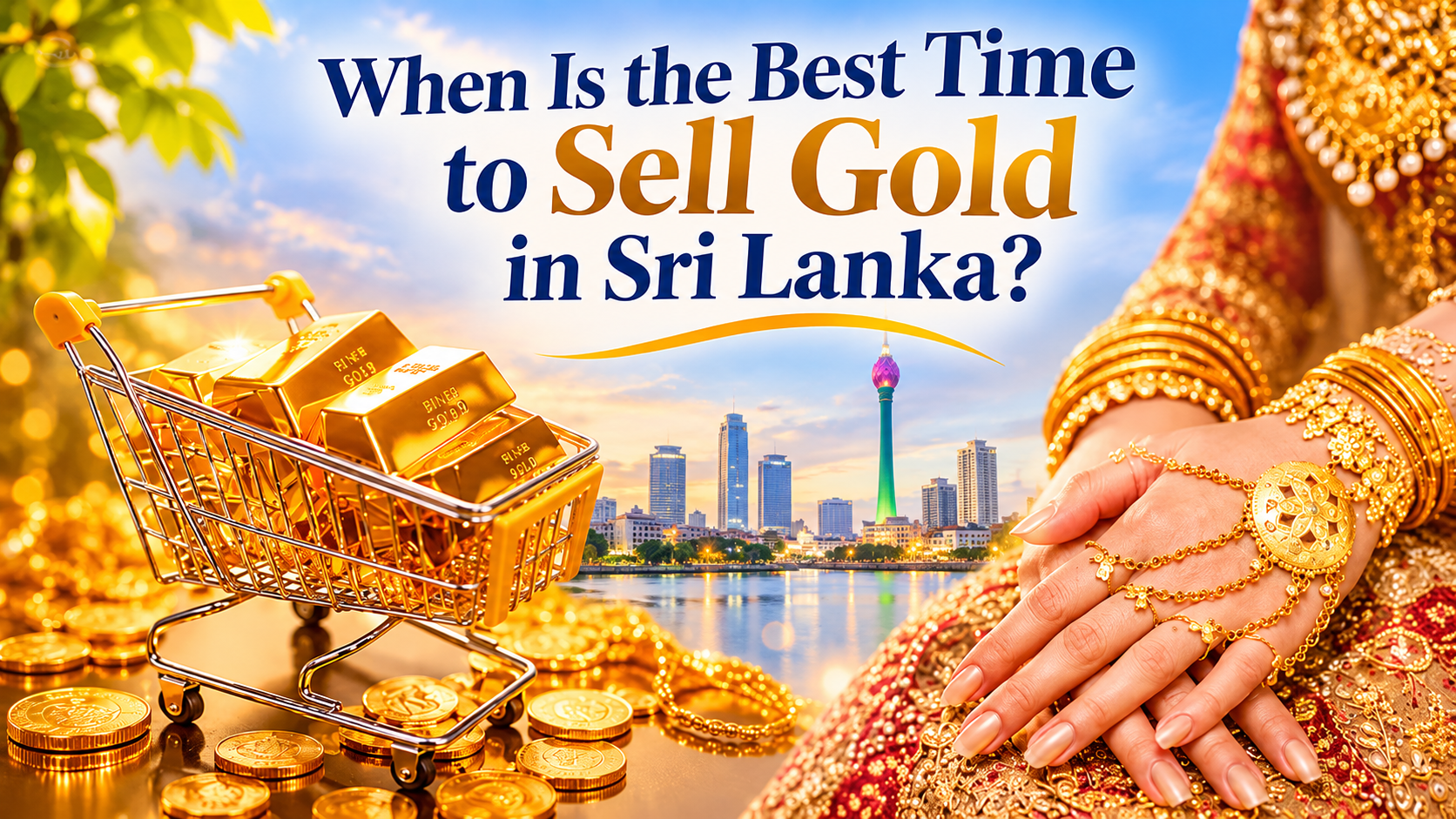
When Is the Best Time to Sell Gold in Sri Lanka?
Gold has always held a special place in Sri Lankan households. From wedding jewellery and traditional ornaments to gold coins and investment bars, people purchase gold for different reasons. Some consider it a form of financial security, while others keep it as a long-term investment or pass it down through generations.
However, there may come a time when selling gold becomes a practical decision. You might need money for an unexpected expense, want to convert unused jewellery into cash, or simply wish to take advantage of favourable market prices.
This raises an important question: When is the best time to sell gold in Sri Lanka?
The answer is not always straightforward. Gold prices change regularly due to international market movements, currency fluctuations, economic conditions and local demand. Although nobody can predict the exact day when gold will reach its highest price, understanding these factors can help you make a more confident selling decision.
In this guide, we explore what influences gold prices in Sri Lanka, how to identify favourable selling opportunities, when you should consider waiting and what to know before selling your gold.
1. Understand How Gold Prices Change in Sri Lanka
Before deciding when to sell, it is important to understand how gold prices are determined.
Gold is traded internationally, and its value is generally quoted in US dollars per troy ounce. However, the price you see in Sri Lanka is influenced by more than the international gold rate.
The local price is affected by several factors, including:
- International gold market prices.
- The exchange rate between the US dollar and Sri Lankan rupee.
- Gold purity and karat value.
- Local market demand and supply.
- Additional costs and pricing differences within the local gold trade.
For example, even if the international gold price remains relatively stable, a weakening Sri Lankan rupee against the US dollar can increase the local value of gold.
Similarly, when international gold prices rise, local gold rates may also increase, depending on currency movements and market conditions.
Understanding this relationship helps sellers avoid making decisions based only on international gold price headlines.
2. Monitor the International Gold Market
The international gold market significantly influences gold prices in Sri Lanka. During economic uncertainty, investors often turn to gold as a safe-haven asset. Three major factors affect its value:
- Interest Rates: Lower interest rates can make gold more attractive to investors, potentially increasing demand and prices.
- Inflation: Rising inflation may encourage investors to buy gold to protect their wealth, supporting higher prices.
- Geopolitical Events: Wars, political tensions and global economic uncertainty can increase demand for gold as investors seek safer assets.
However, gold prices do not always move in the same direction, as currency movements and wider economic conditions also play an important role.
What does this mean for sellers?
Following international gold market developments can help you understand why prices are changing. However, it is important not to assume that every global crisis will automatically create a good selling opportunity.
3. Watch the US Dollar and Sri Lankan Rupee Exchange Rate
One of the most important factors affecting local gold prices is the exchange rate.
Since international gold is primarily priced in US dollars, changes in the value of the Sri Lankan rupee can influence how much gold costs locally.
Consider the following situations:
When the Sri Lankan rupee weakens:
If the rupee loses value against the US dollar, importing gold can become more expensive. This can contribute to higher local gold prices, even when international prices remain relatively unchanged.
When the Sri Lankan rupee strengthens:
A stronger rupee can reduce the local currency cost of internationally priced gold, potentially putting downward pressure on domestic prices.
This is why monitoring the exchange rate alongside international gold prices is useful when deciding whether to sell.
For Sri Lankan gold sellers, looking at both indicators provides a better understanding of local market movements than following international gold prices alone.
4. Consider Seasonal Gold Demand in Sri Lanka
Gold demand in Sri Lanka may increase during wedding seasons, Sinhala and Tamil New Year, and other festive occasions when families purchase jewellery for celebrations and gifts. These seasonal trends can influence local jewellery demand, but they do not necessarily result in higher selling prices. International gold rates and currency movements remain the major factors affecting gold prices.
Selling tip: Seasonal demand is worth considering, but do not delay a selling decision solely because a festive or wedding season is approaching.
5. Follow Gold Price Trends Instead of Focusing on One Day
One of the most common mistakes people make when selling gold is focusing entirely on the price of a single day.
Gold prices can change daily, and sometimes several times within a short period. A sudden increase might appear attractive, but it does not necessarily indicate that the market has reached its highest point.
Instead, examine price movements over a longer period.
Compare Weekly Prices
Checking gold prices over several weeks can help you understand whether the market is generally moving upwards, downwards or remaining stable.
This gives you a better perspective than reacting to a single price update.
Review Monthly Trends
Monthly comparisons can reveal broader market movements.
For example, if gold prices have gradually increased over the past two or three months, you may want to evaluate whether the current rate meets your expectations.
Similarly, if prices have declined recently, reviewing the wider trend can help you avoid making a rushed decision.
Understand Long-Term Movements
Gold is generally considered a long-term store of value, but its market price does not move upwards continuously.
There can be periods of strong growth followed by corrections and temporary declines.
Looking at historical movements can provide useful context, but past performance does not guarantee future price increases.
6. Is It Better to Sell Gold When Prices Are High?
Generally, selling gold when market prices are favourable can help you receive a better value.
However, identifying the exact highest price is extremely difficult.
Imagine that you own a gold necklace and notice that gold prices have increased significantly compared with the previous month.
You might decide to sell because the current rate meets your expectations. However, prices could increase further in the following weeks.
Alternatively, if you wait for a higher price, the market could move in the opposite direction.
This is why trying to identify the perfect selling day can become frustrating.
A more practical approach is to establish a target price based on your expectations and financial requirements.
If the current market rate reaches a level that you consider reasonable, you can evaluate the selling opportunity without depending entirely on future predictions.
Remember, a favourable selling price is not necessarily the highest price ever recorded. It is a price that meets your expectations and suits your circumstances.
7. Consider Selling Your Gold in Stages
If you own a considerable amount of gold and do not need to sell everything immediately, selling in stages may be worth considering.
This approach involves selling a portion of your gold at the current market rate while keeping the remaining amount for a later date.
For example:
- You own 40 grams of gold jewellery.
- You decide to sell 15 grams at the current rate.
- You retain the remaining 25 grams.
- You can review market conditions before deciding what to do next.
This approach can reduce the risk of making a single decision based on an unfavourable market day.
If prices increase later, you still have some gold remaining. If prices decrease, you have already sold a portion at the earlier rate.
However, this strategy does not guarantee a better financial outcome. It is simply one way of spreading the timing of your sales.
It may also be important to consider whether multiple transactions involve additional costs or practical inconvenience.
8. When Should You Avoid Waiting to Sell Gold?
Although monitoring gold prices is important, waiting indefinitely for a better rate is not always the right decision.
There are situations where selling sooner may make more sense.
When You Need Money for an Important Expense
If you need funds for education, medical expenses, household requirements or an urgent financial commitment, selling gold may provide access to money when you need it.
In such situations, your financial requirements may be more important than trying to predict future market movements.
When You Are Holding Unused Jewellery
Many households have old jewellery, broken chains, damaged bangles or ornaments that have not been used for years.
If these items have no sentimental or practical value, converting them into cash may be a reasonable option.
When the Current Price Meets Your Expectations
If the current gold rate provides a value that meets your target, there may be little reason to take unnecessary risks by waiting for an uncertain future increase.
When You Want to Reduce Storage Risks
Keeping valuable gold at home involves certain risks, including theft, accidental loss and damage.
If you no longer need to keep particular gold items, selling them may be a practical way to convert an unused asset into money.
Ultimately, the right decision depends on your personal circumstances, financial priorities and the value you place on holding gold.
9. Understand Gold Purity Before Selling
The value of gold when selling depends on both its market price and purity. Gold purity is measured in karats (K), which indicates the percentage of pure gold in an item.
Common gold purity levels include:
- 24K: 99.9% pure gold
- 22K: 91.6% pure gold
- 21K: 87.5% pure gold
- 18K: 75% pure gold
- 14K: 58.5% pure gold
Gold jewellery may have purity markings such as 916 (22K), 750 (18K), 585 (14K) and 999 (24K). Two items with the same weight can have different values depending on their purity. Therefore, professional gold testing is important to confirm the actual gold content before selling.
10. Does the Weight of Gold Affect the Selling Price?
The weight and purity of gold are both important when determining its selling value. Gold is usually measured in grams, and the pure gold content depends on its karat value.
For example, a 10-gram 22K gold item contains approximately 9.17 grams of pure gold.
When selling jewellery, ensure accurate weighing and transparent valuation. Gemstones, diamonds and other non-gold components should be assessed separately, as their weight should not be included as pure gold.
11. How to Get a Fair Price When Selling Gold
Getting a fair price when selling gold requires choosing a reliable buyer and understanding how the valuation is calculated. Compare buying rates from different buyers and check the applicable gold rate, purity, weight and any deductions or additional charges.
Ensure your jewellery is accurately weighed and tested, and choose a reputable buyer who offers transparent pricing and professional service. Always review the final valuation before accepting an offer, and never feel pressured to sell.
12. Should You Sell Old, Broken or Damaged Gold Jewellery?
Not all gold needs to be in perfect condition to have value.
Old necklaces, broken chains, damaged bangles, single earrings and jewellery that is no longer fashionable may still contain valuable gold.
Many people keep damaged jewellery in storage because they assume it cannot be sold.
However, the value of these items is generally assessed according to their gold content, purity and weight rather than their appearance.
For example, a broken 22K gold chain may still contain the same gold purity as a complete chain of similar composition.
Before selling old or damaged jewellery:
- Separate your gold items from other jewellery.
- Check for visible purity markings.
- Keep gemstones and other valuable components identifiable.
- Avoid repairing or altering items unnecessarily.
- Request a professional purity test and accurate weighing.
- Compare the final valuation before accepting an offer.
Even jewellery that has been unused for many years may represent a valuable financial asset.
13. Common Mistakes to Avoid When Selling Gold
Making an informed decision requires more than simply checking the daily gold rate.
Here are some common mistakes that sellers should avoid.
Selling without checking the current market rate
Always understand the applicable buying rate before accepting an offer. This helps you evaluate whether the quotation is reasonable.
Assuming all gold has the same value
Different karat levels contain different amounts of pure gold. A 22K item and an 18K item of identical weight will not have the same gold value.
Ignoring the weighing process
Always understand how the weight is measured, particularly when jewellery contains stones, clasps or other materials.
Choosing a buyer based only on advertised prices
An advertised rate may not reflect the final amount offered. Ask for a complete valuation before making your decision.
Waiting endlessly for a higher price
There is no guarantee that gold prices will continue increasing. Set realistic expectations rather than relying on uncertain predictions.
Making emotional decisions
Avoid selling in a hurry because of market rumours, social media predictions or temporary price movements. Take time to understand your options.
14. How to Prepare Before Selling Your Gold
Once you decide to sell, a little preparation can make the process easier.
Consider following this checklist:
- Identify your gold items: Separate jewellery, coins, bars and other gold products.
- Check the purity: Look for karat markings and understand the approximate gold content.
- Know the weight: Have a general idea of how much gold you own.
- Check the latest rate: Review current gold prices in Sri Lanka before approaching a buyer.
- Compare valuations: Obtain quotations and understand the differences.
- Ask about payment: Confirm the final amount and payment method before completing the transaction.
- Keep transaction records: Retain any relevant receipts or valuation documents.
Being prepared helps you approach the selling process with greater confidence.
15. Is Now the Right Time to Sell Gold in Sri Lanka?
There is no universal answer to this question because the right time depends on market conditions and individual circumstances.
If international gold prices are rising, the rupee is weakening and local rates are favourable, sellers may find attractive opportunities.
However, these factors do not guarantee that prices will continue increasing.
Similarly, a temporary decline does not necessarily mean the market will remain low.
Before making a decision, consider the following:
- Is the current buying rate acceptable?
- Have you compared recent gold price movements?
- Do you need the money immediately?
- Is the jewellery unused or important to your family?
- Have you received a transparent valuation?
- Are you comfortable with the final amount offered?
If the answers support your decision, selling may be appropriate regardless of whether the market reaches a new record price later.
The most important thing is to make a decision based on reliable information rather than speculation.
Final Thoughts
Finding the best time to sell gold in Sri Lanka is not simply about waiting for the highest possible market price. It involves understanding international gold trends, monitoring the Sri Lankan rupee exchange rate, considering local demand and knowing the actual purity and weight of your gold.
Although nobody can accurately predict every market movement, following price trends and setting realistic expectations can help you identify suitable selling opportunities.
Whether you own unused jewellery, broken ornaments, gold coins or investment bars, always compare buying rates and choose a professional buyer who provides an accurate valuation and transparent payment process.