Have you noticed a number followed by “K” on a gold chain, ring or bangle? Gold Karats Explained: 24K, 22K and 18K — this karat rating indicates gold purity and affects its value. Whether you are buying jewellery, inheriting it, or selling gold in Sri Lanka, understanding karat can help you judge its purity and value with confidence.
What Does “Karat” Mean?
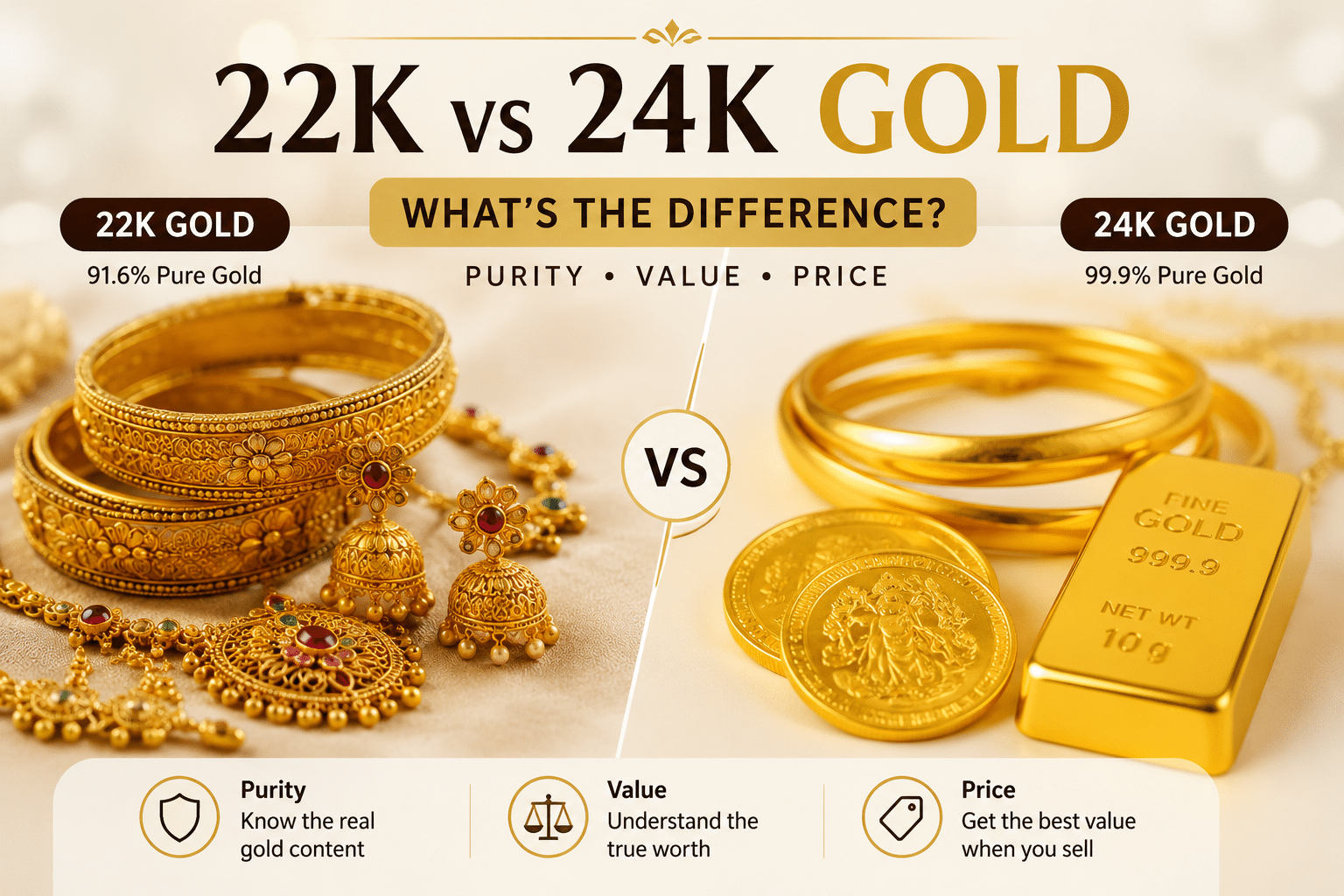
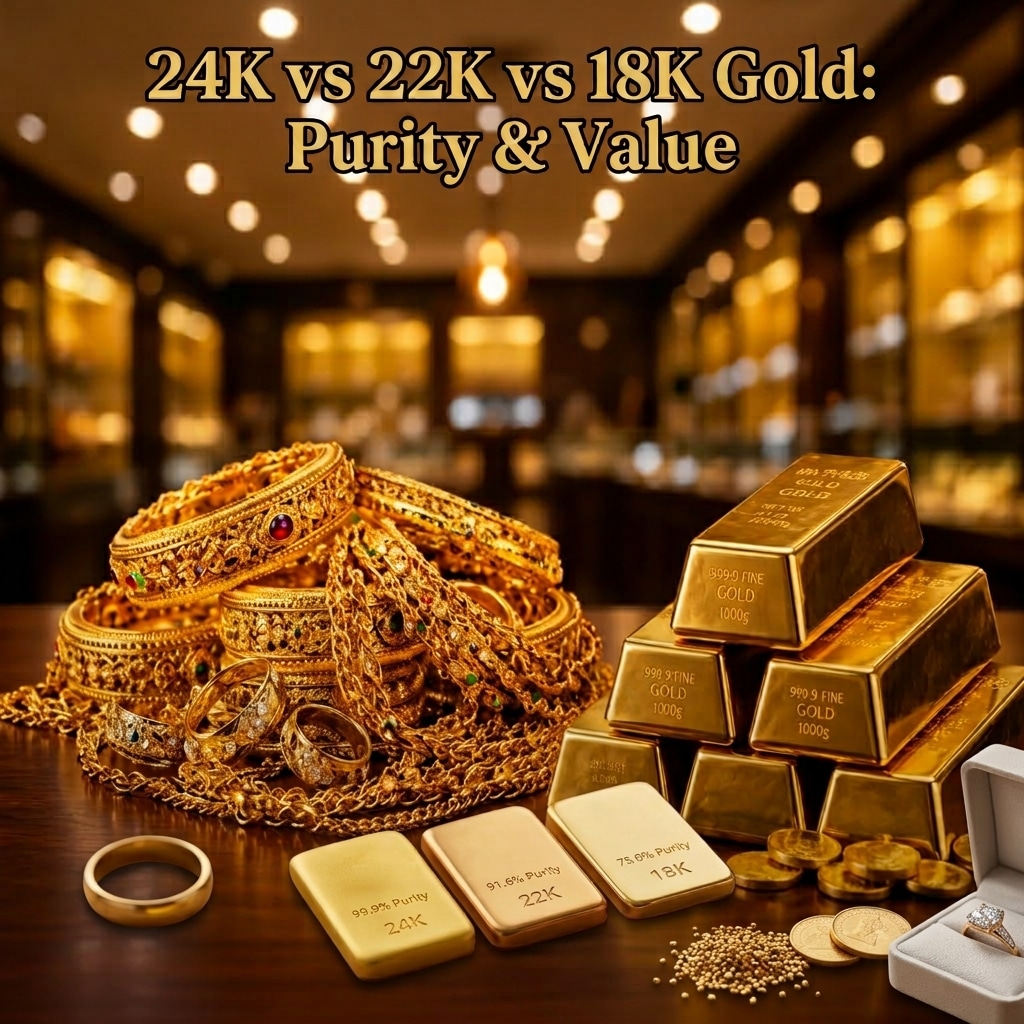
Karat (K) measures gold purity on a scale of 24. Pure gold is 24 karat. A 22K piece has 22 parts gold and 2 parts other metals, and an 18K piece has 18 parts gold and 6 parts other metals.
Karat is not carat. Carat measures the weight of gemstones such as diamonds, while karat measures the purity of gold.
Common Karat Grades
| Karat | Gold content | Typical use |
| 24K | About 99.9% | Coins, bars, investment gold |
| 22K | About 91.6% | Traditional jewellery, chains, bangles |
| 18K | About 75% | Designer jewellery, diamond and gemstone settings |
| 14K | About 58.3% | Everyday, durable jewellery |
24K is the purest form, but it is soft and scratches easily, so it is mostly used for coins and bars.
22K is very popular in Sri Lanka, especially for wedding and traditional gold jewellery. It has a high gold content, with enough copper or silver to hold its shape.
18K is harder and more resistant to wear, so it is often used for pieces set with diamonds. More copper gives a rose tone, and more silver or palladium gives a paler or white finish.
How Karat Affects Value
Gold is valued mainly on its pure gold content, not its size or design. A simple formula helps:
Weight × (Karat ÷ 24) = Pure gold content
A 10-gram chain in 22K gold holds about 9.17 grams of pure gold. A 10-gram chain in 18K gold holds 7.5 grams. The chains weigh the same, but the 22K piece is worth more. The current gold value is then applied to the pure gold content.
What Happens to Making Charges and Gemstones?
When you buy jewellery, the price usually includes making charges for design and craftsmanship. When you sell, valuation is generally based on gold content, so those charges are not normally recovered. Knowing this early helps you set realistic expectations
How to Find Your Piece’s Karat
– Check for a hallmark. Common marks include “22K”, “916” (91.6%) and “750” (75%).
– Look closely at older pieces. Inherited jewellery may have worn stamps.
– Get it tested. If there is no clear mark, professional testing gives a reliable purity reading.
What to Look for in a Gold Buyer
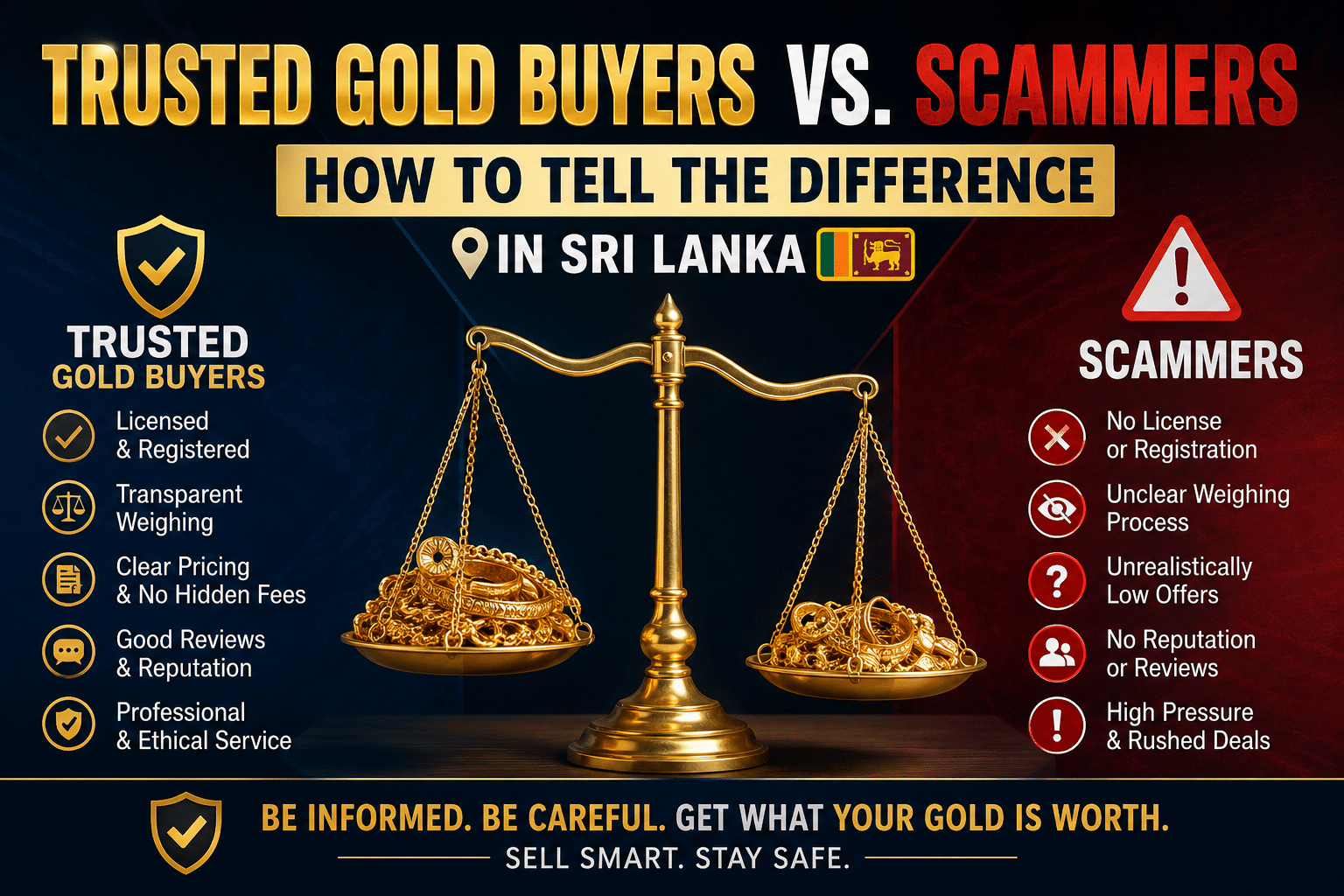
Whether you are comparing gold buyers in Colombo or elsewhere in the country, a reliable buyer should:
1. Test your gold jewellery in front of you and explain the result.
2. Show how the price is calculated from weight, purity and the day’s rate.
3. Be upfront about charges, with no hidden deductions.
4. Value each piece separately, sorted by karat.
5. Give you time to decide, with no pressure.
Experience also matters. A buyer who has valued gold for over 55 years has seen every kind of piece, from heirloom bangles to worn coins, and can explain a valuation clearly. If you are selling gold in Sri Lanka, understanding the valuation process can help you make a more informed decision.You can read more about the gold, diamond and watch buying services available at https://cashgold.lk/services, or browse more guides on selling gold on https://cashgold.lk/blogs
Final Thoughts
Karat is the starting point for understanding gold. A higher karat means higher purity, and a lower karat means a harder, more durable alloy. When you know how karat affects value, you can read a valuation clearly and decide what suits you.
If you have unused or old jewellery, coins or bars at home and are curious what they might be worth, a simple evaluation is a good first step. There is no pressure to sell on the spot. We are always happy to test your gold in front of you, explain the calculation, and let you decide